

February 2010
Interview with Susanne Dunlap, author of The Musician's Daughter
February 27, 2010 13:05
It is my pleasure to have as my guest today writer Susanna Dunlap. A native of Buffalo, NY, Dunlap is the author of The Musician's Daughter and several other music-related novels for adults and young adults. In this interview the author talks about her life, her inspiration for The Musician's Daughter, and writing and publishing, among other things.
Thanks for this interview, Susanne! Please tell us a little about your background in music. When I was 3 or 4 and people would ask me what I wanted to be when I grew up, I said, “Mozart”, I think mainly because I had a wonderful children’s book, Mozart the Wonder Boy. And my mother played the piano, my father loved opera and would play records on weekends. I started playing the piano at the age of five, and got very serious about it. I went to Smith and majored in music, doing a lot of performing. 13 years after I graduated from Smith I went back to do an MA in musicology, then on to Yale for a PhD in music history. I loved those years. I loved researching in libraries in Europe and touching manuscripts by Handel, Traetta, Salieri and many others.
From music studies, to writing... How did that come about and what was your inspiration for The Musician's Daugher? 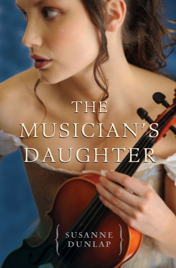 After I finished my studies, circumstances combined to make it difficult for me to get a job teaching. But I had all this wealth of knowledge and a true passion for the stories hidden in the places research couldn’t take you. Plus, I’d been writing all my life anyway—poetry, bad novels, advertising copy (day job). The Musician’s Daughter, like all my books, came from a “What if?” question. What if a young girl wanted desperately to be a professional musician, but her circumstances or the times wouldn’t permit it? And then, I love a good mystery. Plus I’ve been to Vienna more than once for research purposes, and I loved the idea of setting a novel there.
I understand this story is very close to your heart. What is the novel about? It’s about a young girl whose father, a violinist in Haydn’s orchestra for Prince Esterhazy, is murdered on Christmas Eve. His valuable violin is missing, and he’s wearing a mysterious medallion Theresa (the heroine) has never seen before. With her mother about to give birth and indisposed, Theresa decides she must solve the mystery of her father’s murder, and in the process is able to pursue her music—and find the beginnings of true love. You may wonder, why a violinist? I have a very good friend who is one of the finest Baroque violinists in the world, now doing a lot of conducting with her own orchestra: Elizabeth Wallfisch. I thought of her a lot when I was writing this—and my old friend Peter Oundjian!
Did you plot in advance? I always have a sense of where the book is going, but I hate writing to outlines. I let my characters take their twists and turns, and then nudge everything into place and tie up loose ends in the editing process.
How long did it take you to write the book? That’s a difficult question to answer. Writing the first draft doesn’t always take a lot of time. This one I think took about six weeks. But I worked on it, editing and honing it, for months after that—and that was before the editing process that begins with the publishing house.
How was your schedule like while writing the novel? Do you have another job besides writing? Yes, I do have another job, as an Associate Creative Director at a small advertising agency in Manhattan. It’s very demanding, so I write whenever I can in my spare time: on the subway, at home in the morning, on weekends.
How was the publishing process like? Did you search for an agent first? First, you have to write a book! I’ve been with my agent since 2003, when he started working on my first adult book, Emilie’s Voice, which was published by Simon & Schuster in 2005. I would say that anyone looking to be published needs to write the best book they can, get good feedback, and get it as near to perfect as possible, then start looking for an agent. Agents open doors, and also can be very helpful in guiding your career—as my agent has been.
I hear you have another book coming out soon. Tell us all about it! Anastasia’s Secret will be my fourth book. My first two were adult books (Liszt’s Kiss was the second). Anastasia’s Secret is my imagining of the youngest grand duchess of Russia growing up during the Russian revolution. It’s more a romance than The Musician’s Daughter. It comes out March 2.
Is there anything else you'd like to say to my readers? Just thank you! Without readers, we novelists would be in deep trouble. I’m so grateful whenever people read my books, and hope that they get some enjoyment and insight from them.
Thank you, Susanne!
 1 reply
Question about violin cases in the time of Stradivari
February 21, 2010 13:01
Hi all,
I have a question. How were violin cases during the time of Stradivari? I haven't been able to find any drawings or pictures online.
I need the information for one of my upcoming children's picture books--that is, I need to send the info to the illustrator.
I'm guessing they were black leather on the outside and perhaps velvet or cloth on the inside, and that they weren't square like today but had the shape of the violin. Am I correct?
Thanks in advance!
Mayra
Interview with Violinist & Author Paula Yoo
February 19, 2010 06:52
Please welcome my guest today! Her name is Paula Yoo and she's a violinist and a children's and young adult author. In this interview, Paula talks about her musical background, her books, and the National Picture Book Writing Week, among other things.

 Thanks for this interview, Paula. It’s not often I get to interview a violinist who’s also an author. Why don’t you start by telling us a little about Paula, the violinist.
I have wanted to be a writer since I was a little girl. I was inspired after reading “Charlotte’s Web” in the first grade – I started writing my own stories after reading that book. My first “novel” was a 75-page handwritten book entitled “The Girl Called Raindrop.” (Hey, I was only seven years old at the time!) I actually mailed it in to Harper & Row because they published my favorite series, the “Little House on the Prairie” books by Laura Ingalls Wilder. They wrote a very nice letter back saying I should try out for their children’s writing contest. I remember being upset and tearing up the letter because I felt I was not a “child” writer – I was a “real” writer! So I think of that as my first rejection letter! LOL!
Fast forward many years – I was an English major in college, and then received my M.S. in journalism and an MFA in creative writing. I spent the first ten years after college working as a newspaper and magazine journalist. Journalism taught me how to write on deadline – it was a great experience. I then taught for a little bit before switching over to being a full-time TV screenwriter for dramas. During that time, I sold my first two picture books and first YA novel.
Tell us about your books. Are they violin related?
My first two children’s picture books are not violin-related, but I still feel the lessons learned in these books are very similar to what a violinist learns. My first picture book was SIXTEEN YEARS IN SIXTEEN SECONDS: THE SAMMY LEE STORY (Lee & Low 2005). It was a biography of the Olympic gold medalist diver Dr. Sammy Lee. My second picture book, SHINING STAR: THE ANNA MAY WONG STORY (Lee & Low 2009), came out in July 2009. It is about the ground-breaking actress and first Asian American female movie star Anna May Wong. In both books, Dr. Lee and Anna May Wong worked hard at perfecting their art (for Dr. Lee, it was mastering difficult dives and for Anna May Wong, it was learning the craft of acting). They also struggled to come to terms with their own artistic dreams versus their parents’ dreams for them to have secure lives. Often times, parents want their children to have “regular” jobs and financial security. Pursuing sports or the arts is a very risky dream. I identified with Dr. Lee and Anna May Wong for those same reasons.
My first YA novel, GOOD ENOUGH, was published in 2008 by HarperCollins. This book is based on my own life growing up as a “violin geek.” I have often read books about violinists that come off as very “well-researched,” but do not have the authenticity and “insider knowledge” that a real violinist would have. I tried to bring that authenticity across in my novel. In addition, although my novel is about a Korean American teenaged girl who pursues her love of music despite her immigrant parents’ academic pressure on her, I wanted my novel to strike a universal chord among all teens. So I focused on the universal theme of how teens come of age by learning that sometimes, it’s not about being successful. It’s about being happy. It’s a difficult decision to make, and one that requires a lot of courage for a teenager to make.
How do you divide your time between being a violinist and an author?
I love playing my violin and can’t give it up! I have found the perfect balance in Los Angeles, where there are many freelance music opportunities for professional musicians. Of course my writing deadlines come first – but I try to always make time for music gigs. I have played with the Torrance Symphony and also given chamber music recitals with my friends. I also specialize in electric rock violin and country fiddle/folk music, so I have also had a chance to play with many cool and diverse groups, from the Scottish Fiddlers of Los Angeles to country singer Buck McCoy to the famous No Doubt! I currently am playing with a King Crimson tribute band called THE GREAT DECEIVERS. Our website is here: http://www.myspace.com/tgdkingcrimson We have a gig this Friday Feb. 19th at Paladino’s in Tarazana, CA. I love playing this challenging prog rock music – it’s like a mix of heavy metal, jazz, rock, classical, and experimental music.
I understand you’re the founder of NaPiBoWRiWee (National Picture Book Writing Week). Tell us all about it!
NaPiBoWriWee happened by accident. I was feeling frustrated last year because I hadn’t written another picture book in several months and wanted to keep up the moment I had going with two published picture books. So I decided for one week I would imitate the famous NaNoWriMo (National Novel Writing Month) contest and write seven picture books in seven days. I know that writing picture books is a very complex and difficult process – so my goal was to at least come up with seven very rough drafts of seven different stories and then I would pick the best one and work on developing it more. It was totally a silly and fun idea I had to motivate myself. I decided to blog about it, and I invited anyone who wanted to participate to join me on my quest. I also wanted to promote my latest picture book, SHINING STAR: THE ANNA MAY WONG STORY, so I also had a contest where I would pick a participant by random in a drawing to win an autographed copy of my book! To my shock, HUNDREDS of people emailed me, saying they wanted to participate! What was supposed to be a fun, intimate silly thing ended up becoming a huge event that inspired people who had never written a picture book before. I had people join SCBWI (Society of Children Book Writers & Illustrators) because of NapiBoWriWee. I was very proud and happy to have helped all these promising writers finally take that first step on their own writing journeys. It was both touching and humbling. So of course I will have another NaPiBoWriWee this May 2010!
How can one register?
There is no official “registration.” NaPiBoWriWee participants can either email me at paula at paulayoo dot com to request to be put on the list of names I will be collecting for the end-of-the-week prize random drawings. Or they can register on my website at http://paulayoo.com so they can participate in the comments section and forums during the NaPiBoWriWee week. I also collect the names of everyone who registers on my website to include in the prize drawing.
For more info, go here:
http://paulayoo.com/content/help-and-faqs
And for info on last year’s NaPiBoWriWee, go here:
http://paulayoo.com/content/natl-picture-book-writing-week-may-1-7-2009
I will announce the official dates for NaPiBoWriWee 2010 shortly. In
addition, I have a store with NaPiBoWriWee paraphernalia:
http://www.cafepress.com/paulayoo“>http://www.cafepress.com/paulayoo
Where are your books available?
My books are available at your local bookstore. If they’re not in stock, please request them! You can also purchase my books at amazon.com. My YA novel GOOD ENOUGH is also available as an e-Book on Kindle and other e-reader devices. The official website contacts for these books are listed
below:
GOOD ENOUGH (HarperCollins 2008)
http://www.harperteen.com/book/index.aspx?isbn=9780060790851
SHINING STAR: THE ANNA MAY WONG STORY (Lee & Low 2009)
http://www.leeandlow.com/books/368/hc/shining_star_the_anna_may_wong_story
SIXTEEN YEARS IN SIXTEEN SECONDS: THE SAMMY LEE STORY (Lee & Low 2005)
http://www.leeandlow.com/books/109/hc/sixteen_years_in_sixteen_seconds_the_sammy_lee_story
Do you have a website and/or blog?
My website is http://paulayoo.com. I blog on it regularly. You can also
find me at www.myspace.com/paulayoo and my music violin page at
www.myspace.com/paulayooviolin
What’s in the horizon?
I am currently Co-Producer on the SyFy original TV series, EUREKA. My previous TV credits include NBC’s THE WEST WING and LIFETIME’s SIDE ORDER OF LIFE. Right now I’m swamped with TV work-related deadlines and responsibilities. So whenever I have some precious free time, I spend that working on a couple new novels and picture book ideas I have that are works-in-progress.
Is there anything else you’d like to tell readers?
Thanks for reading my books!  And if you play the violin – KEEP PRACTICING! Thank you so much for this fun interview!
Thanks for the interview, Paula!
Interview with Gerald Elias, author of Devil's Trill
February 7, 2010 13:48
 Please welcome my special guest Gerald Elias, musician author of the mystery novel, Devil's Trill, recently released by Minotaur. He was kind enough to take time out of his busy schedule to answer my questions about writing and publishing. Visit his website at www.geraldelias.com. To read my review of Devil's Trill, click HERE.
Thanks for the interview, Gerald. You’re a concert violinist, conductor and composer. What got you into writing?
I remember in second grade we had an assignment to write a comic strip, and I did one of a horse doing pushups for JFK's national physical fitness program. My teacher, who seemed to be impressed with my work, asked "Is this original?" I didn't know what the word meant, so I somberly shook my head and said, "Oh, no!" My father loved writing as an avocation and in his later years became famous for writing letters to the editor of his local newspapers. He also enjoyed writing poetry--only the kind that rhymes--so I guess writing is in my genes.
Tell us how your inspiration for Devil’s Trill came about? I understand the story was based on lessons you had developed for your violin students?
Some of the most boring stuff I had to read as a violin student were pedagogical tomes about music and the violin. I decided I wanted future generations of musicians to be able to stay awake while learning about some of the challenges thrust upon us in the music world, so while each chapter of my book was a violin lesson of sorts (it included subjects such as how to choose a violin, how to audition for an orchestra, and the esthetics of music, there was an interweaving, fictional story about a legendary Stradivarius that had been stolen from Carnegie Hall. Initially "Devil's Trill" was called "Violin Lessons" and the story line was somewhat superficial and the main character, the blind violin teacher Daniel Jacobus, no t fully developed, but as years passed the book was transformed into a full-fledged who-dunnit, maintaining those aspects of violin-playing and music necessary to move the story along.
Was the story fully plotted and outlined before you sat down to write it?
Quite the contrary. I had a general idea of where I wanted it to go, but being my first book, it was only after many rewrites that everything came together. In the meantime, more characters were added, more plot twists, and of course everytime you make a change like those, everything else that came before has to be reconciled with the new material. I'm just glad that I had a full-time job as a musician while I wrote the book, which gave me the luxury of learning as I went.
The protagonist, Jacob, is quite quirky and volatile. It is certainly a distinctive character. How did you go about creating him?
Initially he was much less so, though I always conceived him being blind. There were two reasons for his blindness. First was the notion that when lacking one sense, the other four are enhanced. This of course enabled him to hear music and perceive the world around him with greater clarity. The second reason was more metaphorical. Music, obviously, is something that is heard, yet so often in the music profession the visual takes primacy. By being blind, Jacobus had the ability to perceive the "truth" of the music in a way those with sight couldn't. His more cantankerous qualities, however, were the result of conversations I had with friend and author, Katharine Weber, who suggested that a character like Jacobus needed to be not only multi-dimensional, but also to develop throughout the book's course. You may notice that his crotchetiness is slightly less edgy at the story's close.
I love the way you include bits of information about violins and violinists in the story. Was this a conscious decision? Was your purpose to educate as well as entertain the reader?
I think the mark of a good mystery writer is to welcome the reader into the author's own special world. Whether it's a story by Walter Mosely, Donna Leon, Dick Francis, or John LeCarre, the reader may learn a great deal about that world, but it's not a conscious effort. I tried to write "Devil's Trill" in such a way that even people who have never experienced the world of classical music can enjoy the story. Certainly I hope that millions of people will buy and enjoy the book, and I don't mean to sound like a missionary, but if after reading "Devil's Trill," people take the opportunity to go one step farther and listen to the music discussed in it, they'll have a far more enriching experience for having done it.
How long did it take you to write the book?
Ten long years!
How was your schedule like while working on the novel?
I began the book in 1997 in Italy while on sabbatical leave from my job with the Utah Symphony, so that year I had plenty of time. Thereafter, I did most of my writing in the morning before going to work and spent the rest of the day daydreaming for improving it.
Would you share with my readers a bit about the publishing process? How was that like? Did you find the agent searching stage easy?
When I finished the first draft of the book I knew absolutely nothing about how to get it published. Some people told me you had to have an agent. Others said the hell with the agent; go directly to the publisher. Others said self-publishing was the way to go. I ended up sending the manuscript to random agents and publishers and the response was unanimously negative. I was about to give up when one day I read "The Music Lesson" by Katharine Weber and saw on the jacket that (at that time) she was teaching at my alma mater, Yale. So I wrote her and asked if she would be kind enough to read my book. Miraculously, not only did she consent to do that, she offered wonderful constructive criticism, and between her and MJ Rose, I was connected to a wonderful agent, Simon Lipskar, at Writer's House. That's not the end of the story, though, because even though Simon and I reworked the book, we still received unanimous rejections from publishers, at which point Simon, also a musician, felt he was too close to the subject matter and handed me over to his mystery specialist, Josh Getzler, now with Russell and Volkening. After further rewriting we resubmitted "Devil's Trill" to publishers, and voila! a positive response from St. Martin's Press. That was a nice day.
I hear you play the Devil’s Trill in your book signings. Tell us about that and what you’re doing to promote the book.
I thought it would be a novel experience (no pun intended) for readers who took the trouble to go to the book signing to get a special glimpse into the book, and I was delighted to be able to provide that. The Devil's Trill Sonata by Giuseppe Tartini is one of several pieces I played at the book signings, and I explained how each of them played a significant role in the plot. Tartini's sonata is given the title for the book for a very special reason. Back in the 18th century he told of how, when he woke up in the middle of the night, the devil was sitting at the foot of his bed. He gave the devil his violin who then played with such astounding virtuosity that Tartini was dumbfounded. He tried to write down what the devil had played and ended up with the Devil's Trill Sonata, perhaps the greatest thing he ever wrote, though he felt it was inadequated compared to what the devil had played. So, whereas Tartini confronted the devil at the foot of his bed, Daniel Jacobus, 250 years later, confronts his own personal demons in the form of the diabolical Piccolino Stradivarius.
When is book II coming out?
"Danse Macabre" will be released the beginning of September 2010. It will again feature Daniel Jacobus and his friend, Nathaniel Williams, as they try to unravel the mystery of beloved violinist who, having just performed his swansong at Carnegie Hall, is brutally murdered by a young rival. Or was he?
Is there anything else you’d like to share with my readers?
Having devoted most of my life to being a professional musician, I feel deeply honored and blessed to have received such a positive response to my writing. There is a common thread here. Both music and literature as forms of communication can bring us together in a world where more and more barriers seem to go up daily. It is my goal to help bring us together.
Thank you and good luck with your book!
New violinist author: Paula Yoo
February 7, 2010 13:30
 Hi all,
I love to discover new violin-related novels and especially those written by violinists who are also authors.
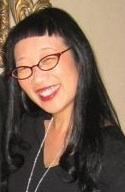
Here's a new one for you: Paula Yoo. Check out her book and website.
She has agreed to an interview so I'll have her as a guest soon!
About her book:
How to make your Korean parents happy:
1. Get a perfect score on the SATs.
2. Get into HarvardYalePrinceton.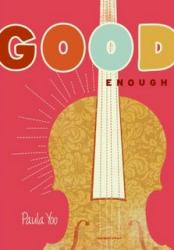
3. Don't talk to boys.*
Patti's parents expect nothing less than the best from their Korean-American daughter. Everything she does affects her chances of getting into an Ivy League school. So winning assistant concertmaster in her All-State violin competition and earning less than 2300 on her SATs is simply not good enough.
But Patti's discovering that there's more to life than the Ivy League. To start with, there's Cute Trumpet Guy. He's funny, he's talented, and he looks exactly like the lead singer of Patti's favorite band. Then, of course, there's her love of the violin. Not to mention cool rock concerts. And anyway, what if Patti doesn't want to go to HarvardYalePrinceton after all?
Paula Yoo scores big in her hilarious debut novel about an overachiever who longs to fit in and strives to stand out. The pressure is on!
*Boys will distract you from your studies.
--Mayra Calvani, Violin and Books
More entries: January 2010


Violinist.com is made possible by...


Dimitri Musafia, Master Maker of Violin and Viola Cases

International Violin Competition of Indianapolis

Violinist.com Holiday Gift Guide


Johnson String Instrument/Carriage House Violins
Subscribe
Laurie's Books
Discover the best of Violinist.com in these collections of editor Laurie Niles' exclusive interviews.

Violinist.com Interviews Volume 1, with introduction by Hilary Hahn

Violinist.com Interviews Volume 2, with introduction by Rachel Barton Pine