
We have thousands of human-written stories, discussions, interviews and reviews from today through the past 20+ years. Find them here:


For the Record, Op. 359: Chris Thile; Leila Josefowicz; Pacifica Quartet; Albert Sammons
Welcome to "For the Record," Violinist.com's weekly roundup of new releases of recordings by violinists, violists, cellists and other classical musicians. We hope it helps you keep track of your favorite artists, as well as find some new ones to add to your listening! Click on the highlighted links to obtain each album or learn more about the artists.
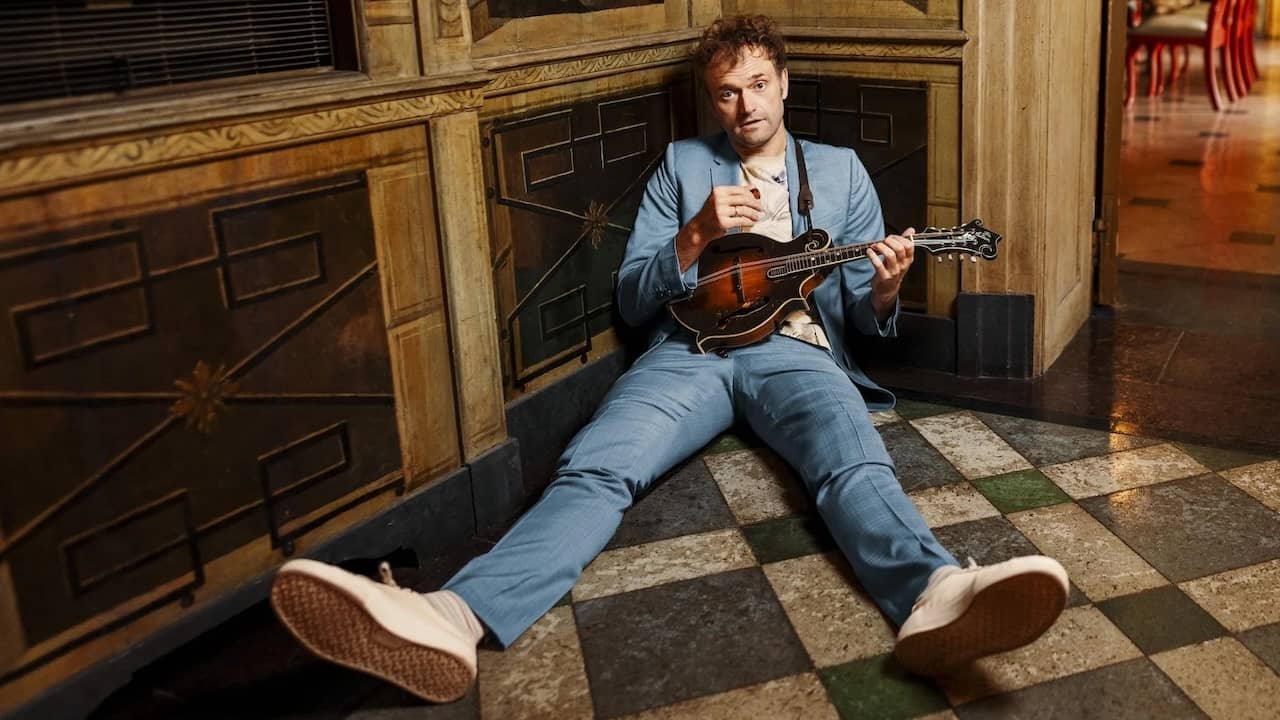
Mandolinist Chris Thile. Photo by Josh Goleman.
Bach: Sonatas and Partitas, Vol. 2
Chris Thile, mandolin
Mandolin virtuoso Chris Thile has done it again - he has taken J.S. Bach's Solo Sonatas and Partitas for Violin and reimagined them for mandolin, shedding new light and perspective on them that violinists are likely to appreciate. It's not the first time - more than 10 years ago, Thile released his Volume 1 of these works - in which he performed Sonatas No. 1 and 2; and Partita No. 1 on mandolin. Earlier this month he released Volume 2, which completes the cycle with Partitas No. 2 and 3, and Sonata No. 3. In the liner notes, Thile writes that for Volume 1, "I spent most of its development and execution worrying about whether Bach would like it." He writes that the reason Volume 2 exists is that he loves practicing Bach. "Communing with something THAT beautiful, made by a human being, continuing to be made and enjoyed by so many human beings, makes you proud to be human. And so you practice it. As often as you can, everywhere you go. Your living room. Hotel room. Onstage before the rest of the band shows up for soundcheck. In an empty corner of an airport after a cancelled flight ...Would he like it? Though I was tempted to capitalize ‘he’ just now, I’m trying not to care. Do I like it? Yes." Read our 2013 interview with Chris Thile about Bach here. BELOW: Chris Thile - Bach: Partita No. 3 in E major, BWV 1006: III. Gavotte en rondeau (live).
Adès: The Exterminating Angel Symphony & Violin Concerto
Leila Josefowicz, violin
Minnesota Orchestra, Thomas Søndergård conducting
"With orchestral textures both radiant and unsettling, Adès evokes a surreal musical landscape, brought vividly to life by Søndergård’s incisive direction and violinist Leila Josefowicz’s electrifying performance." Read our new interview with Leila Josefowicz here. BELOW: Thomas Adès' Violin Concerto: I. Rings
The Korngold Collection
Pacifica Quartet
Eric Kim, cello
Milena Pajaro-van de Stadt, viola
Orion Weiss, piano
The Pacifica Quartet presents a recording of Erich Wolfgang Korngold’s complete string quartets, as well as and other rarely heard chamber works in a program that traces the composer’s remarkable evolution from a prodigy of post-imperial Vienna to a pioneering film composer in Hollywood. “We believe that this music should be played, and we want younger musicians to be out there playing it," said Pacifica Quartet cellist Brandon Vamos. "It is so special, communicative, expressive, with incredible harmonies and melodies, and such a unique voice that only Korngold has. A child prodigy, proclaimed a genius by Mahler at the age of 10, it's amazing to see how well the music is written." The album features Korngold’s String Quartet No. 1 in A Major, Op. 16; String Quartet No. 2 in E-flat Major, Op. 26; String Quartet No. 3 in D Major, Op. 34; Piano Quintet in E Major, Op. 15 with pianist Orion Weiss; and String Sextet in D Major, Op. 10, with violist Milena Pájaro-van de Stadt and cellist Eric Kim. BELOW: Trailer for the album.
Ernest John Moeran: Symphony in G minor; Violin Concerto
Albert Sammons, violin
BBC Symphony Orchestra, Sir Adrian Boult, conducting
The troubled life of English composer Ernest John Moeran (1894 – 1950) ended 75 years ago, when he fell into the water at Kenmare in Ireland, and his death was officially recorded as a cerebral hemorrhage. To honour the life of E. J. Moeran, SOMM Recordings is releasing broadcasts that were privately recorded by Lionel Hill, author of the book Lonely Waters – the Diary of a Friendship with E. J. Moeran. This commemorative release, with audio restoration by Lani Spahr, includes Moeran’s Symphony in G minor conducted by Sir Adrian Boult and his Violin Concerto with the Albert Sammons (1886-1957) as soloist. This recording, a BBC Home Service broadcast from Norfolk on April 28, 1946, is Sammons’ last public concerto performance - possibly his only known live recording. BELOW: the 1946 performance of E. J. Moeran: Violin Concerto.
If you have a new recording you would like us to consider for inclusion in our "For the Record" feature, please e-mail Editor Laurie Niles. Be sure to include the name of your album, a link to it and a short description of what it includes.
You might also like:
- Violinist.com Interview with Chris Thile: Bach Sonatas and Partitas, on Mandolin
- Interview with Violinist Leila Josefowicz: Being Open to New Music
- For the Record, Op. 358: Geneva Lewis, Anna Urpina, Johan Dalene, Benjamin Nabarro, Ariel Quartet, Ensemble Resonanz
* * *
Enjoying Violinist.com? Click here to sign up for our free, bi-weekly email newsletter. And if you've already signed up, please invite your friends! Thank you.
Replies


Time for EJ Moeran's music to receive more and deserved attention!
Of course the mandolin is tuned exactly like the violin so anything you can play on the one...at least as far as 3rd position. I once played in a "joke" quartet where someone (erhmm..) had the bright idea that the second violin could rest his violin for a movement and pick up a mandolin. It turned out not to be as easy as I'd assumed.
It is not easy! I have a mandolin that gathers dust - the "picking" aspect of it is really a challenge for me. A gorgeous sounding instrument, though, and Chris brings such a different set of sounds and ideas to the Bach, I really love it.
Here is Chris Thile's Chaconne from this recording - really different feel on mandolin, and he also does a few interesting things; for example after the major section, when it goes into minor again, he starts off with a tremolo (which is more common in mandolin playing than in violin playing, since there is no bow to extend the note). It makes it feel so shivery and dark, then it gains conviction when he returns to the single notes for the march to the end - but then the last notes get shivery again. You can argue this and that (a tremolo takes away the strong rhythm, but then that can be the point) I found it quite moving and effective.
Highly enjoyable as Thile's performance is, on this instrument he can't come close to encompassing the epic grandiloquence of Bach's invention. Busoni's piano transcription on the other hand in my opinion goes too far the other way. Bach knew what he was doing when he conceived the chaconne for solo violin, although I can't help thinking the ideal rendition only existed in his head.

How nice to see Albert Sammons here around. Albert Sammons just won the German Grammy for his two Elgar VC recordings.
https://www.schallplattenkritik.de/bestenlisten/2025/02?c=10
Steve, the excellent writer Ariane Todes just posted this review of Chris Thile in concert at Queen Elizabeth Hall on Saturday night, and this excerpt from her review addresses your comments:
"Thile himself is self-deprecating and makes fun of his 'novelty instrument,' citing the ancient advice that 'You go to war with the army you have, not the army you want.'"

Thanks for the tip, Laurie, great review indeed. I just watched Chris Thile's live performance of the second half of the Chaconne on YouTube, and I was surprisingly deeply touched despite, or because of, the somewhat limited dynamic range of the mandolin. I don't think I've ever heard the steady pulse in the Chaconne as clearly as in his recordings!
This article has been archived and is no longer accepting comments.









November 14, 2025 at 03:18 AM · Maybe next time Chris Thile will be on the Golden Record instead of Arthur Grumiaux. We saw him in Blacksburg a few weeks ago -- absolute astounding.