
We have thousands of human-written stories, discussions, interviews and reviews from today through the past 20+ years. Find them here:


Bach's Cello Suites: Once Dismissed as Curiosities, Now Hailed as Iconic Works
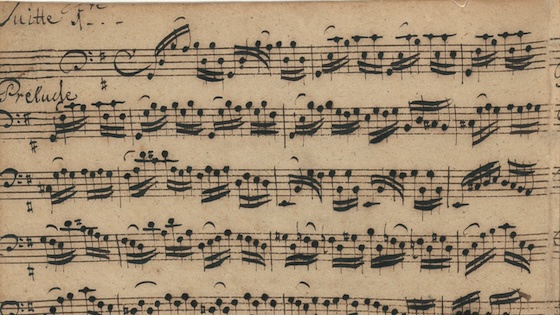
"Compared with [J. S. Bach’s] six sonatas for violin without accompaniment, these violoncello solos are light and unpretending. Nevertheless, they are interesting, because they are Bach’s. The first and last (in C major) are little better than exercises for the acquirement of mechanical facility, more suitable to the studio than to the concert-room, for which they were clearly never intended . . ."
This tepid review was one critic’s take on an 1868 performance by Alfredo Piatti of three movements from Bach’s Cello Suites, at London’s Monday Popular Concerts. Bach had composed the Cello Suites around 1720, and they were first published a century later. Nonetheless it was not until around the 1860s that they slowly began to enter the concert hall, where they received a mixed critical response.
After all, the Bach revival of the early 1800's had celebrated the grandeur and expression of his sacred choral works and the contrapuntal mastery of his keyboard and organ music. So what was one to make of music for a single cellist, playing alone? Didn’t these pieces need something . . . more? What would it take for them to sound less like études and more like concert music?
Some musicians experimented with adding piano accompaniments to enrich Bach’s harmony and to appeal to the tastes of contemporary audiences. Robert Schumann, who deemed the Cello Suites "the most beautiful and important compositions ever written for the violoncello" nevertheless held that Bach’s unaccompanied music for violin and cello "would be considerably improved by a piano accompaniment and thus accessible to a larger public." His accompaniment to the Cello Suites is mostly lost today — only Suite No. 3 survives — but manuscript copies circulated during the 19th century as far as Adelaide (Australia). Friedrich Wilhelm Stade performed his own keyboard accompaniment for performances at the Altenburg Singakademie with an unnamed trombonist in 1869 and with a violist in 1870, to critical acclaim.
As late as 1927, the acclaimed cellist Julius Klengel recorded the Sarabande from Cello Suite No. 6 with Stade’s cello-piano arrangement.
A Gramophone critic found that the accompaniment was "well done and surely preferable to listening to the ‘cello struggling with three- and four-part harmony."
Klengel’s recording might be compared to recordings by Beatrice Harrison made in 1920, with Sir George Henschel performing his own piano accompaniment.
Both Klengel’s and Henschel’s recordings offer a sense of turn-of-the-century performance traditions — such as an aesthetic of endless melody, pronounced portamento on all slurred melodic leaps in both directions, and the use of piano accompaniment — that were largely supplanted by Pablo Casals’s enormously influential recordings of the late 1930s.
If the audience and critical response to the earliest (unaccompanied) performances of the Cello Suites was uneven, the situation couldn’t be more different today. Whereas some 19th-century concert reviewers found the Cello Suites to be étude-like and unsuitable as concert repertoire, a New York Times critic wrote in 1995 that the Cello Suites - played in their original unaccompanied form - "are not only the greatest music written for the instrument but in the running for the greatest music ever written."
The Cello Suites cycle has been recorded by more than 300 cellists and in a variety of transcriptions for other instruments. Two Cello Suites albums — by Janos Starker and Yo-Yo Ma — have been awarded a Grammy. They are available in over 100 published editions.
A growing number of cellists have taken on the Herculean feat of performing all six Cello Suites either in a pair of concerts or a single marathon recital. The first cellists to regularly perform the complete cycle in the 1940s were Henri Honegger and Max Oróbio de Castro, and they were soon joined by many others.
More recently, in 2015, Yo-Yo Ma performed the cycle at a BBC Prom in the Royal Albert Hall for a sold-out crowd of more than 5,000 people.
The Cello Suites also have made their way into popular culture; in particular, the Prelude to Cello Suites No. 1 has been widely used. It has been covered and sampled in many genres, including by Genesis guitarist Steve Hackett’s "Horizons" (1972) and on NU’EST’s J-pop song "Flying Angel" (2014).
It appears in dozens of film soundtracks, ranging from Tony Scott’s horror film The Hunger (1983), in which David Bowie portrays a vampire cellist, to such Blockbusters as Peter Weir’s Master and Commander: The Far Side of the World (2003), in which it represents the sea.
The same prelude is incorporated into the anime series Neon Genesis Evangelion (1995) and Hyouka (2012), as well as the K-drama series Naeil’s Cantabile (2014). In the series premiere of the Netflix series Wednesday (2022), protagonist Wednesday Addams plays a solo-cello cover of the Rolling Stones’s "Paint It Black," but the sheet music on screen shows the Prelude to Cello Suites No. 1, with handservant Thing turning pages (see below, around the 2:06 mark.)
Perhaps owing to its abstract nature, the prelude to Cello Suite No. 1 has been used in commercials for such motley brands as American Express, Cadillac, La-Z-Boy, and Papa Murphy’s pizza.
For many players, the Cello Suites are first learned in childhood and are revisited on a near-daily basis throughout our musical lives. This sense of Bach’s Cello Suites as lifelong musical companions is emphasized in two recent memoirs by cellists: Miranda Wilson’s The Well-Tempered Cello: Life with Bach’s Cello Suites (2022) and Judith Glyde’s Under the Goddess of the Sky: A Journey through Solitude, Bach, and the Himalayas (2024). Since Bach’s Cello Suites can be played in so many ways, they offer an avenue for continual challenge, growth, and renewal for musicians who play them as well as for audiences who take the opportunity to listen anew with fresh ears.
I invite readers to explore my own contribution to the Cello Suites — a new book entitled Bach: The Cello Suites, recently published on the New Cambridge Music Handbooks series. As a violist, teacher, and musicologist, I tell the story of when and how Bach composed the Cello Suites, which kinds of instruments were in use during his lifetime, how musicians in his orbit understood the various types of preludes and dances, and how we can make sense of conflicting information in the manuscript copies and editions.
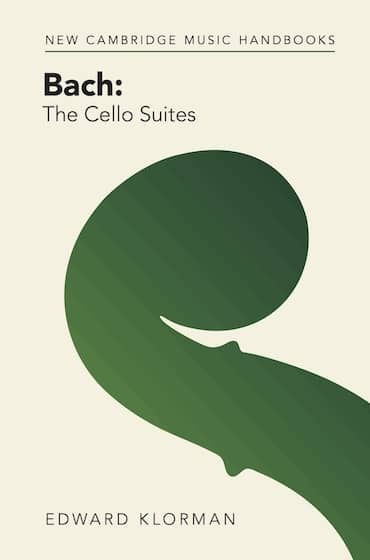
I share a variety of previously unpublished material about the earliest known performances of Bach’s Cello Suites, and I trace their rise from relative obscurity to their present status as iconic works with a resonance extending beyond the concert hall into the popular imagination. With this history, I hope to show how, in grappling with this challenging and inspiring repertoire, musicians have always found imaginative, new ways to interpret these fascinating thirty-six movements.
You might also like:
- Edward Klorman and the Theory of Musical Conversation
- Falling in love with Bach's Cello Suites Again
- Discussion: Editions of the Bach Cello Suites transcribed for viola
* * *
Enjoying Violinist.com? Click here to sign up for our free, bi-weekly email newsletter. And if you've already signed up, please invite your friends! Thank you.
Replies
That's wonderful that you play these pieces every day! Would you believe that violinists have been playing them since the 1860s, when Ferdinand David published a violin transcription and gave a public performance? It's been interesting that several violinists have recorded them in the past decade (Tomás Coric, Johnny Gandelsman, Jorge Jiménez, and Rachel Podger).

The best transcription that I have seen for the violin was published some years ago by Valerie Arsenault. It's very "urtext" with minimal markings and the production (paper quality, notation, etc.) is excellent. It's just the first four, however. I think the last two are not too well suited for the violin although Augustin Hadelich can probably prove me wrong. I believe it was the 20th-century violinist Joseph Szigeti who stated that a young student should learn and play the cello suites before attempting the solo sonatas and partitas for violin. It's good advice -- and a few of the cello movements appear in the Suzuki violin books.
Paul, that’s interesting to hear your take on the various editions and about which suites you feel adapt best for violin. In an earlier comment, I mentioned Ferdinand David’s edition from the 1860s, which is the earliest violin edition. He was concertmaster of the Leipzig Gewandhaus and professor at the Leipzig Conservatory, and he intended his edition as preparation for intermediate violinists who would later study the Sonatas and Partitas. I suspect this may have been a German tradition that influenced Suzuki to include some movements in his violin method. David performed some movements from Cello Suite No. 5 in a New Year’s concert at the Gewandhaus in 1865. I quote two reviews of his performance in Chapter 4 (one was extremely enthusiastic, and the other found the Cello Suites to be puzzling curiosities).

I'd be interested to know which NYT critic was responsible for the absurd hyperbole that the cello suites "are not only the greatest music written for the instrument but in the running for the greatest music ever written." Bach himself wrote a number of equally strong contenders for the silly GOAT game.

@Edward - a couple of years ago, I saw Johnny Gandelsman play one of them in recital at the Library of Congress.
@Paul - I agree with Szigeti that the Cello Suites are good prep for the S&Ps. The latter are significantly more difficult.
@Steve, I agree with you about the hyperbole. The point (which I develop with more nuance in the book) is that opinions were widely divergent in the nineteenth century, ranging from those who dismissed the Cello Suites as curiosities to others who felt they were extraordinary discoveries to yet others who felt they needed to be adapted (with added piano or other more extensive recomposition) to be suitable for concerts. Whereas today they are widely recognized as important and highly innovative music with a well-established place in the repertoire.
The NY Times piece is Kenneth Furie, “Bach, a Cello, a Church in Burgundy, Rostropovich.” The New York Times, June 18, 1995: 28H.
I've wondered if Kreutzer had based his A major violin etude (No.13) on the Prelude from Bach's G Major Cello Suite. The similarity is noteworthy in my opinion. Perhaps he or the Paris Conservatory had a copy of the Suites sometime around the turn of the 19th century.
@Raymond, it's an interesting question, but Kreutzer's études were published in 1805 and may have been composed earlier. The first edition of the Cello Suites appeared in 1824, published by (or at the instigation of) the Parisian cellist Pierre Norblin. The editorial preface notes that Norblin had long searched for a manuscript on which to base his edition before tracking one down in Germany. That suggests that manuscript copies of the Cello Suites were not easy to find at the time Kreutzer composed his études.
Indeed, while the similarity of Kreutzer 13 and the Bach prelude is indeed very apparent, let's also not make too much out of it, as the idiom underlying both pieces was very established already.
This article has been archived and is no longer accepting comments.






December 9, 2025 at 11:01 PM · They are surely some of the greatest works composers have produced. I played them on the violin when that was my main instrument, and now I play one movement each day when I practice my viola. Thank you for sharing all of that information and good luck with your new book.