We have thousands of human-written stories, discussions, interviews and reviews from today through the past 20+ years. Find them here:


The Universe in Twelve Minutes: RAY CHEN's Pre-Concert Ritual
A rare glimpse into the gravitational pull between precision and nerves
Charleston, SC – January 21, 2026
Ninety minutes before stepping onto the Charleston stage, the world-renowned violin virtuoso RAYCHEN did something most soloists would never consider: opened Tonic and invited the world into the green room.
What unfolded in those twelve minutes wasn't a polished performance preview.
It was something far more valuable: a master class in how the universe of a concerto collapses into a single, playable moment.

The Physics of Preparation
Watch RAYCHEN tune octaves in the Tchaikovsky cadenza, and you're witnessing something closer to astrophysics than musicianship.
Each adjustment (microscopic shifts in finger placement, infinitesimal bow pressure changes) mirrors what cosmologists call fine-tuning: the precise calibration of universal constants that allows structure to exist at all.
"This is all good," RAYCHEN says after the fourth pass through a particularly treacherous harmonic passage. But "good" here means something specific.
It means the artificial harmonics in the third movement's opening will ring with that crystalline clarity that separates wishful thinking from acoustic reality.
It means the octaves won't drift sharp under pressure.
It means the instrument has become an extension of intention.
For those who've wrestled with the Tchaikovsky in the practice room, watching this calibration process is quietly revolutionary.
RAYCHEN isn't drilling passages.
This isn't mechanical repetition.
It's diagnostic listening: treating each technical element as a physical constant that must hold under the chaos of performance.

Entropy as Creative Fuel
"A little bit of nerves," RAYCHEN admits to the Tonic, with the kind of honesty that makes listeners lean closer to the Tonic.
Here's what makes this confession powerful: it reframes the pre-performance anxiety we all carry. In thermodynamics, entropy isn't destruction. It's the generative disorder from which stars form. RAYCHEN's nerves aren't weakness to be conquered; they're raw energy waiting for transformation into what the violinist describes as "warm and tender" expression.
This psychological honesty matters because it gives permission.
Permission to be human at the edge of perfection. Permission to acknowledge that even after San Francisco and San Diego, the third tour stop still generates that flutter of uncertainty.
Permission to trust that technical preparation and emotional vulnerability can coexist in the same ninety-minute window.
The Gravitational Field of Community
Midway through checking spiccato bounce, RAYCHEN glances at the livestream chat.
"Yummy boy," comes the playful remark to the Tonic team named Ronald.
Advik gets praised as "so positive" (someone RAYCHEN wishes could be in every studio session).
The violin virtuoso describes the moment poetically: "stars in the sky."
This is where the metaphor deepens.
Just as galaxies shape each other through gravitational interaction, RAYCHEN's dialogue with the Tonic community creates a mutual pull.
The Tchaikovsky Challenge (which RAYCHEN admits to contributing only 140 XP to, "not 140,000") becomes more than a practice gamification.
It's a shared resonance, a collective tuning.
"This is not an advertisement," RAYCHEN clarifies. "It's simply sharing the challenge with those already in the community."
That distinction matters.
It's the difference between broadcasting and conversing. Between performing and communing.
Initial Conditions
The Big Bang required exact parameters. Fractionally different values for gravity or electromagnetic force, and the universe collapses or disperses into a void.
RAYCHEN's pre-stage practice operates on the same principle.
Those twelve minutes of livestreamed preparation aren't a warm-up.
They're the establishment of initial conditions from which an entire performance will evolve.
The finger positions verified now will hold (or not) through the cadenza's exposed heights.
The bow distribution tested now will determine whether the third movement dances or stumbles. The psychological settling now will shape whether nerves transform into brilliance or dissolve into distraction.
What makes this ritual compelling isn't perfection. It's the willingness to show the calibration process itself. To demonstrate that even at the highest level, music-making remains a negotiation between human limitation and artistic aspiration.

Why This Matters
In an era of curated highlight reels, RAYCHEN's pre-concert livestream offers something increasingly rare: transparency about the unsexy work that makes magic possible.
For violin students grinding through Kreutzer études, for professionals managing their own pre-concert anxiety, for anyone who's ever wondered how world-class musicians actually prepare, these twelve minutes are a gift.
Because what RAYCHEN reveals is this: mastery isn't the absence of doubt.
It's the systematic transformation of doubt into creative energy through precise, honest, relentless calibration.
"I have to go now," RAYCHEN says as concert time approaches. "See you later."
And then: the livestream ends.
The practice ritual is complete.
The initial conditions are established.
The universe of the Tchaikovsky Concerto is ready to expand.

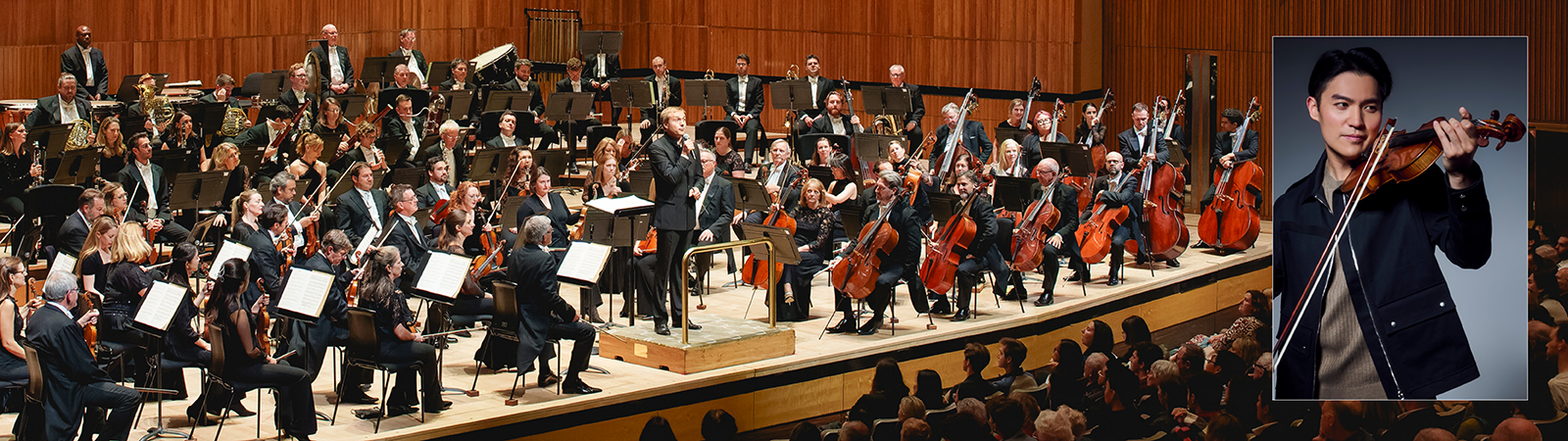
RAYCHEN continues the US tour with the Royal Philharmonic Orchestra.
The violin virtuoso's commitment to transparency and community engagement represents an evolving model of what it means to be a 21st-century artist: one where the preparation and the performance, the technical and the human, exist in honest equilibrium.